
Best 5 Water Softeners of 2026
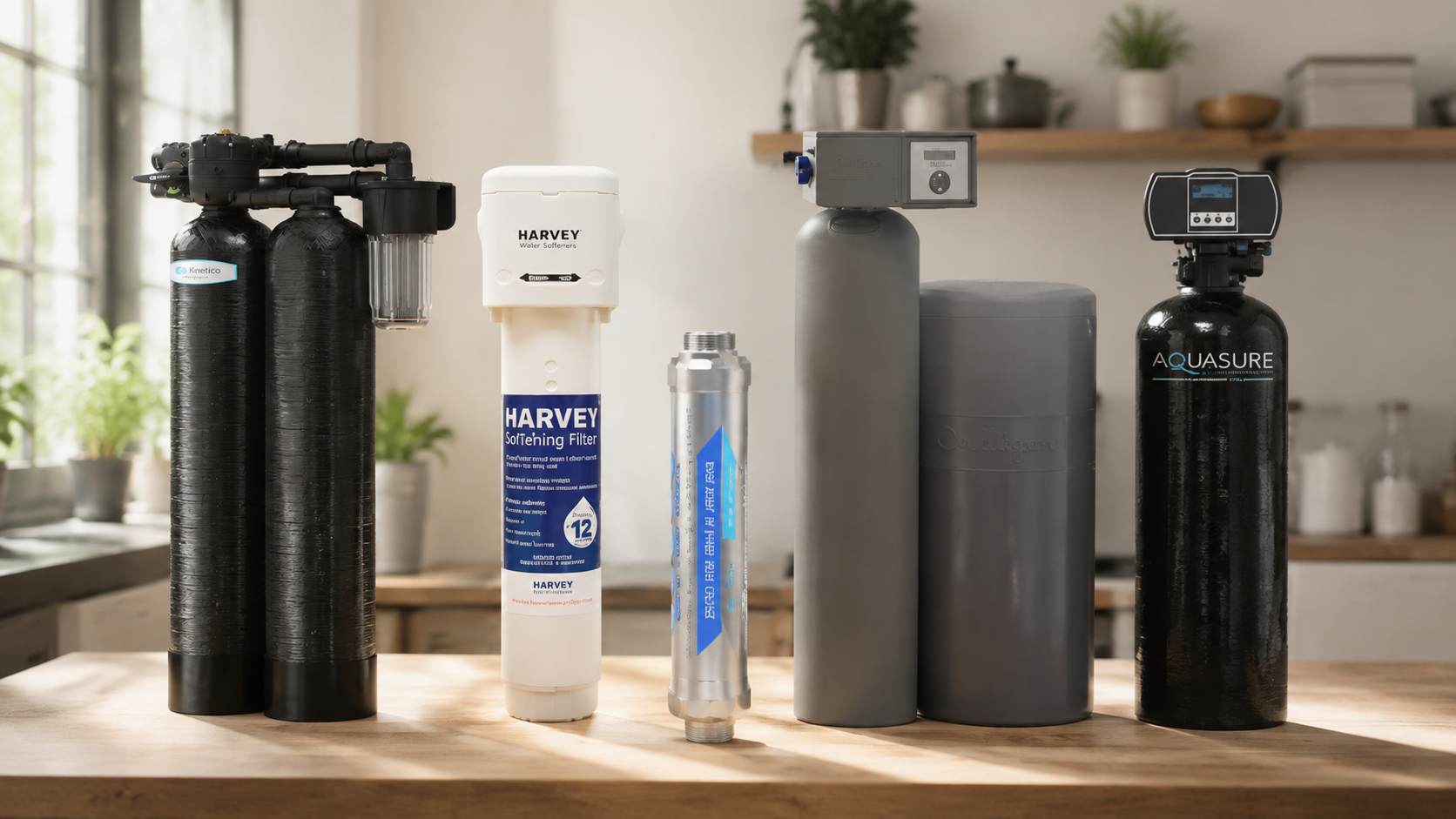
Hard water acts like a slow-motion wrecking ball for a home’s plumbing. You might see the white, chalky residue on showerheads or faucets, but the real trouble happens where you can’t see it. Mineral buildup creates a suffocating layer inside pipes and heating elements, forcing your appliances to burn through more energy just to maintain basic output. Eventually, those “minor” issues turn into expensive, full-system replacements.
Installing a water softener hits the reset button on your home’s water quality. By stripping out the calcium and magnesium that cause scale, these systems prevent damage before it settles into your hardware. Beyond just extending the lifespan of dishwashers and heaters, you’ll notice a significant drop in how much soap and detergent you actually need, as the water becomes far more effective at cleaning.
Current advancements in these systems have replaced the clunky, wasteful tanks of the past. High-efficiency designs now track water usage in real-time, triggering cleaning cycles only when your specific household demand requires it. This smart approach keeps your water consistently conditioned while slashing salt waste and water consumption. It’s an effective way to move from constant, reactive plumbing repairs to a set-it-and-forget-it strategy for home protection.
Selecting the right unit requires balancing flow rates, resin durability, and regeneration logic. The following breakdown compares five top-tier systems that actually hold up under daily pressure. If you are tired of scrubbing away mineral stains and want to stop the unseen erosion of your plumbing, these options provide the reliable, long-term defense your home needs.

Elliot approaches home water treatment from an infrastructure-first perspective. He has spent a decade auditing 35+ whole-home systems, with a specific focus on resin capacity and salt-usage efficiency. By mapping the trade-offs between different filtration technologies, he provides homeowners with the data needed to choose a unit that balances plumbing protection with long-term maintenance costs.
Our Evaluation Standards
Softening Performance
Measures how effectively each system reduces hard water minerals, including scale buildup prevention and improvements in water feel, cleaning, and appliance protection.
Filtration Capacity & Efficiency
Evaluates treatment capacity, salt or filter consumption, and how consistently the system maintains water quality during daily household use.
Installation & System Compatibility
Reviews setup requirements, plumbing connections, space needs, and whether the unit fits different home water systems.
Maintenance & Long-Term Reliability
Assesses regeneration cycles, upkeep requirements, component durability, and overall performance over extended operation.
#1 TOP PICK

from XXX
Overall Grade
A+
9.7/10
OVERALL ANALYSIS
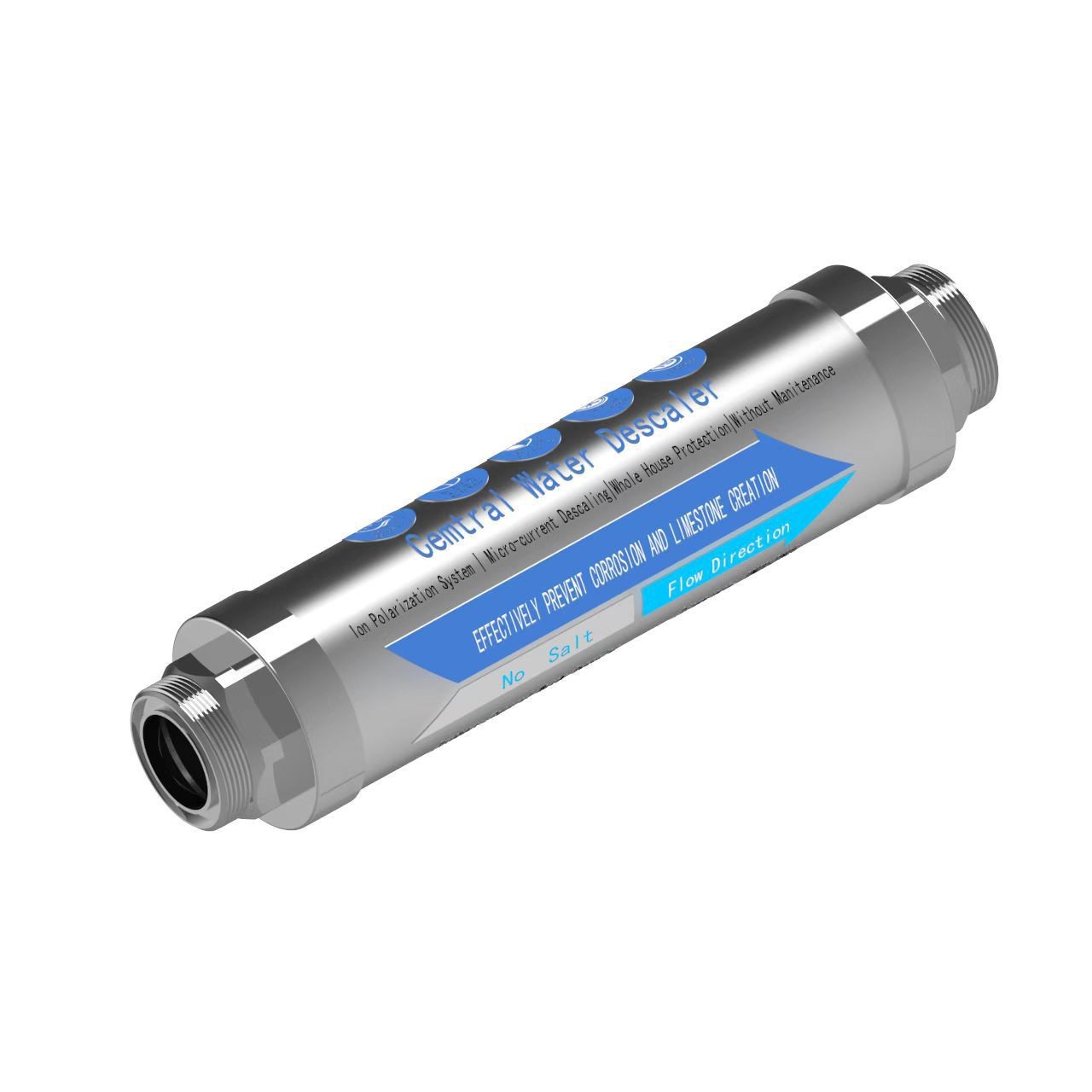
The XXX Water Softener establishes itself as a formidable breakthrough in home utility, effectively neutralizing the persistent threat of limescale before it compromises your infrastructure. By leveraging an advanced, eco-friendly design, this system eliminates the need for salt, electricity, or cumbersome filter replacements, offering a truly maintenance-free solution. It represents a fundamental upgrade in domestic water management, shifting the focus from reactive, costly repairs to proactive, high-performance protection for your entire home.
Deep within the unit, multi-stage filtration capabilities perform work that goes well beyond simple softening. It doesn’t just reduce existing mineral deposits; it actively clears out heavy metals, chlorine, and odors, ensuring that every tap delivers exceptionally crisp water. Furthermore, the integration of Ag+ antibacterial protection enhances safety by inhibiting bacterial growth, all while thoughtfully retaining the essential minerals that your household relies on for healthy skin and hair.
Durability sits at the heart of this design, featuring a 316 stainless steel body built to resist both corrosion and daily wear. Its impressive high-flow capacity of 2,642 gallons per hour, coupled with universal compatibility for copper, PVC, and CPVC piping, guarantees that your home’s plumbing remains fully protected without any drop in pressure. This mechanical efficiency directly translates into lower energy bills and a significantly extended lifespan for your water heaters and appliances.
High demand often leads to swift inventory turnover, meaning you might occasionally encounter slightly longer shipping windows than with generic, off-the-shelf alternatives. Such a minor delay serves as a clear indicator of the system’s widespread professional acclaim. Investing in this technology provides a vital, lasting shield for your plumbing. For those prioritizing unmatched performance and eco-conscious innovation, this system creates an entirely new standard for conditioned, reliable water.
PROS
CONS
THE RESULT
The XXX Water Softener redefines home maintenance by effortlessly neutralizing limescale through an ingenious, salt-free design. Its 316 stainless steel construction and high-flow capacity ensure your appliances run efficiently while delivering purified, mineral-rich water. Though its immense popularity occasionally creates brief shipping delays, this robust, eco-friendly system remains an indispensable upgrade, effectively shielding your plumbing and reclaiming your home’s long-term health with unmatched, set-it-and-forget-it reliability.
#2 TOP PICK

from Kinetico
Overall Grade
B+
9.3/10
OVERALL ANALYSIS
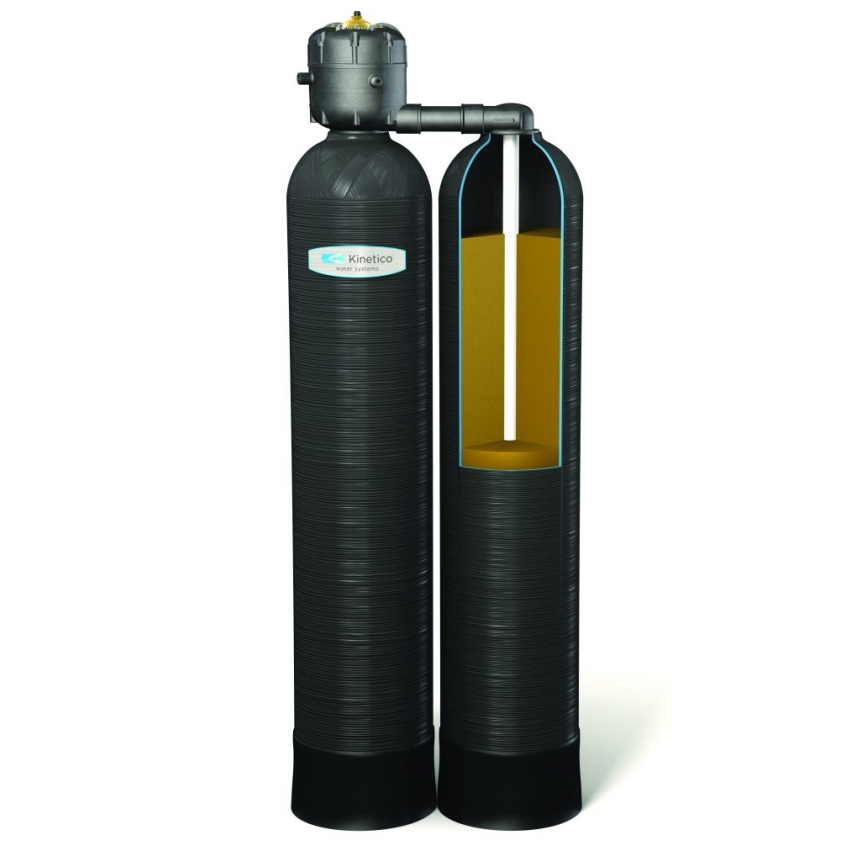
This water softener focuses on reliable whole-house water treatment with a simple mechanical approach. The no electricity operation is one of its key advantages, reducing dependence on power while keeping the system running through normal water usage. The twin-tank design also helps maintain a steady supply of softened water, even during regeneration.
Its low-maintenance structure makes it appealing to homeowners who prefer a system with fewer electronic components. The efficient regeneration process helps reduce unnecessary water and salt usage, while the quiet operation keeps it suitable for everyday household environments.
The main consideration is the higher installation cost, as professional plumbing work is usually required. The larger twin-tank setup may also need more space compared with compact electronic models, and users looking for smart monitoring features may find fewer options available.
For households dealing with hard water and looking for long-term reliability with minimal maintenance, Kinetico is a strong choice. Buyers who prefer app control or a lower upfront cost may want to explore newer electronic alternatives.
PROS
CONS
#3 TOP PICK

from Harvey
Overall Grade
B
9.0/10
OVERALL ANALYSIS
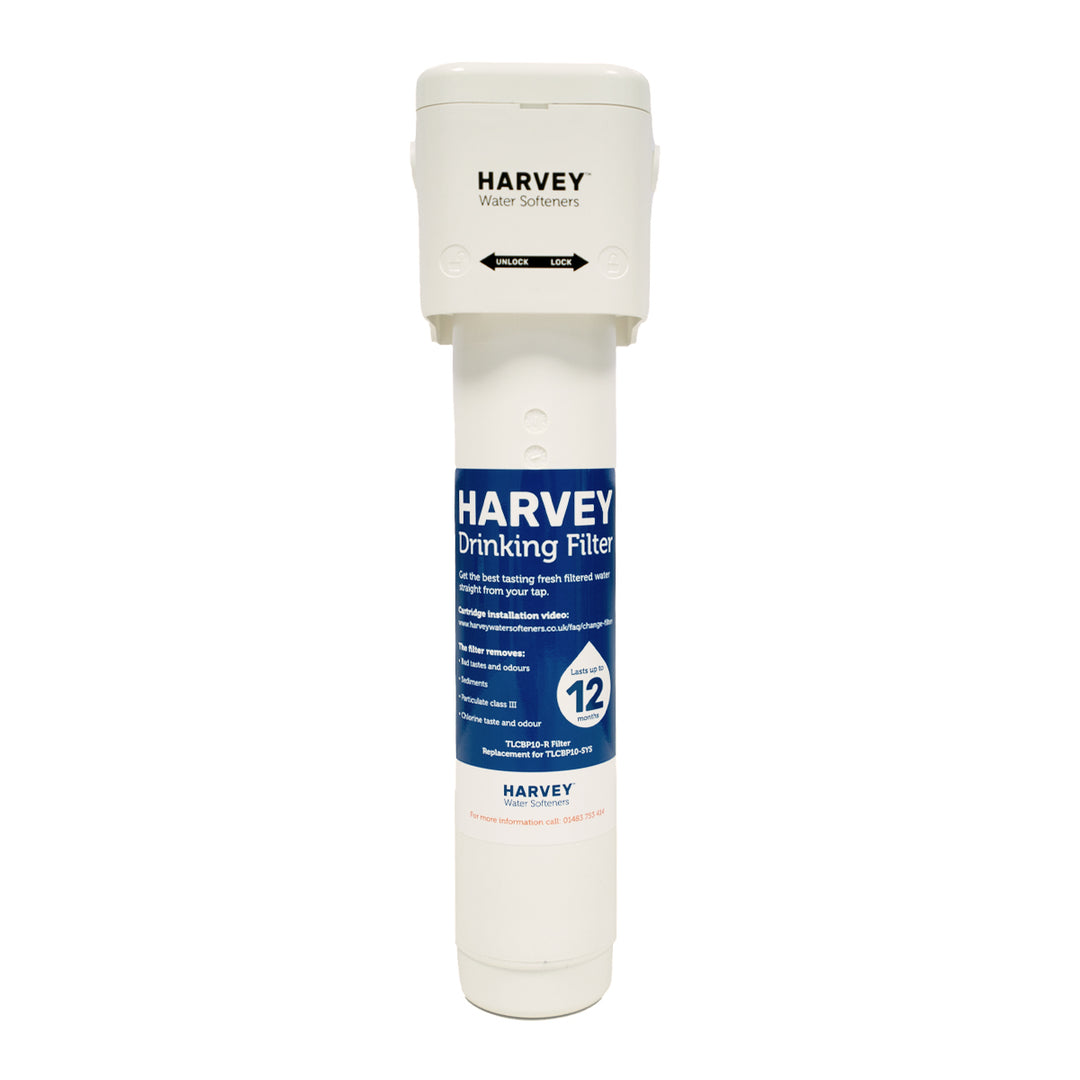
This water softener is designed for households that want a compact way to reduce the effects of hard water without taking up too much installation space. The compact design makes it easier to place in smaller utility areas, while the twin-tank system helps maintain a consistent supply of softened water during everyday use.
The system focuses on simplicity rather than complex controls. Its lower salt consumption can help manage ongoing costs, and the straightforward operation makes it easier for homeowners who prefer a reliable setup with minimal adjustments. It can also help reduce limescale buildup on taps, showers, and household appliances.
However, the installation process requires professional plumbing, which may increase the total cost. The smaller capacity may also limit performance in larger homes with higher water demand, while users looking for app-based monitoring may find fewer smart options.
Harvey is a practical choice for families who value compact size, easy operation, and dependable soft water performance. Larger households or technology-focused buyers may prefer systems with higher capacity and smarter controls.
PROS
CONS
#4 TOP PICK

from Culligan
Overall Grade
C+
8.7/10
OVERALL ANALYSIS
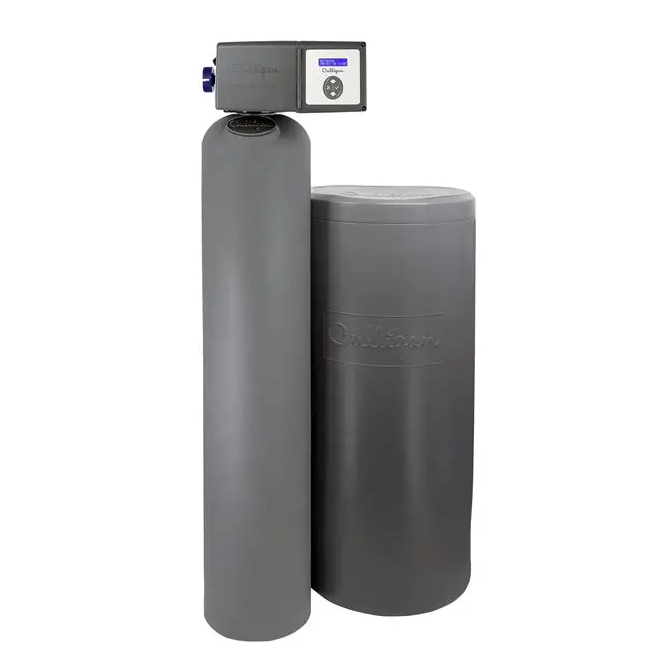
This water softener combines reliable water treatment performance with flexible options for different household needs. The limescale reduction performance helps protect pipes, taps, and appliances from hard water buildup, making it suitable for homes in areas with higher mineral levels in the water supply.
A key advantage is the availability of customised system options and service support. Homeowners can choose a setup based on water usage, household size, and installation requirements, while professional assistance can simplify setup and maintenance.
The overall ownership cost is an important factor to consider. Installation and service fees can increase the total investment compared with standard systems, and support quality may depend on local providers. The need for professional servicing may also be less convenient for users who prefer handling maintenance independently. This type of system suits families who value professional support, tailored water treatment, and dependable performance. Users looking for a simple DIY setup or lower long-term costs may prefer other alternatives.
PROS
CONS
#5TOP PICK

from Aquasure
Overall Grade
C
8.4/10
OVERALL ANALYSIS
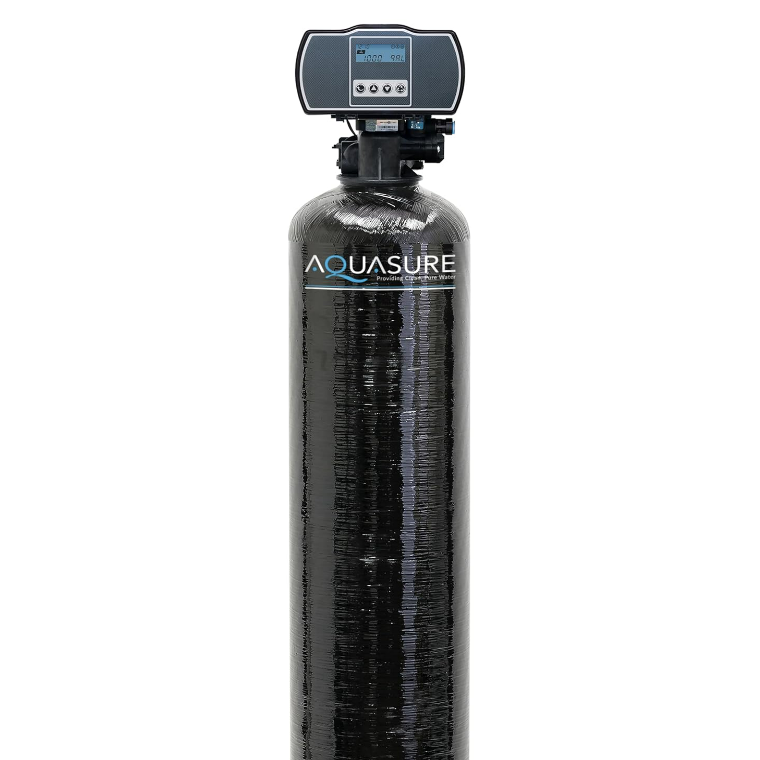
This water softener offers a practical solution for households looking to reduce the effects of hard water and improve daily water quality. The filtration support helps limit mineral buildup, which can protect plumbing systems, appliances, and bathroom fixtures over time.
One advantage is the range of capacity options, allowing users to select a system based on household size and water consumption. The adjustable settings also provide more flexibility, helping homeowners fine-tune performance according to local water conditions.
Installation remains an important consideration, as the system usually requires plumbing work and may not be suitable for users who want a simple DIY setup. Larger units may need extra installation space, while regular salt maintenance adds ongoing tasks and costs.
This type of system is a good choice for households that value customisable performance, reliable softening, and long-term water protection. Users who prefer compact designs or advanced smart controls may find other options more suitable.
PROS
CONS
WHAT IS A WATER SOFTENER?
A water softener is a household water treatment system designed to reduce hard water minerals such as calcium and magnesium, helping improve water quality throughout the home. It is commonly installed on the main water line to treat water used for bathing, cleaning, laundry, and household appliances.
Unlike basic filters, water softeners use ion exchange technology or alternative treatment methods to reduce mineral buildup before water reaches taps and appliances. This helps limit limescale deposits, improve soap performance, and protect plumbing systems over time.
Modern water softeners vary in capacity, regeneration method, and control features. Key factors such as softening performance, salt usage, installation requirements, maintenance needs, and system size determine overall effectiveness. A suitable model helps maintain smoother household water use and reduces the impact of hard water in daily life.
Benefits of a Water Softener
-
✅
Reduces hard water effects:
Helps lower calcium and magnesium buildup that can cause limescale on taps, pipes, and appliances. -
✅
Protects household plumbing:
Reduces mineral deposits inside water systems, helping extend the lifespan of fixtures and equipment. -
✅
Improves cleaning performance:
Allows soaps and detergents to work more effectively by reducing mineral interference. -
✅
Creates smoother daily water use:
Makes bathing, laundry, and household cleaning more convenient with softer water. -
✅
Supports appliance protection:
Helps reduce scale buildup in washing machines, dishwashers, and water heaters. -
✅
Suitable for whole-house treatment:
Treats water throughout the home when installed on the main supply line. -
✅
Reduces maintenance needs:
Helps limit frequent cleaning caused by hard water stains and deposits. -
✅
Improves long-term water management:
Allows households to maintain more consistent water quality over time.
Things To Consider When Choosing a Water Softener
-
Softening performance: Check how effectively the system reduces calcium and magnesium levels, as this determines its ability to control limescale buildup.
-
Water capacity: Consider the system size and flow rate to ensure it can meet your household’s daily water demand.
-
Regeneration method: Look at how the unit regenerates, including salt usage, water consumption, and how often maintenance is required.
-
Salt efficiency: Choose a model that balances soft water performance with reasonable salt consumption to reduce running costs.
-
Installation requirements: Check connection size, available space, and whether professional installation is needed before purchase.
-
Maintenance needs: Evaluate how easy it is to refill salt, clean components, and keep the system operating reliably.
-
Control features: Consider digital displays, automatic adjustments, and monitoring options for easier daily management.
What To Avoid When Choosing a Water Softener
-
Poor softening performance: Avoid systems that cannot effectively reduce hard water minerals, as they may fail to control limescale buildup.
-
Incorrect capacity selection: Do not choose a unit that is too small for your household, as it may struggle with daily water demand.
-
High salt and water consumption: Avoid inefficient models that require frequent regeneration, as running costs can increase over time.
-
Difficult maintenance requirements: Skip systems that are complicated to refill, clean, or service, as they can add extra ownership effort.
-
Unsuitable installation design: Avoid models that do not match your available space or plumbing setup, as installation can become more difficult and costly.
By Elliot Vance
Elliot approaches home water treatment from an infrastructure-first perspective. He has spent a decade auditing 35+ whole-home systems, with a specific focus on resin capacity and salt-usage efficiency. By mapping the trade-offs between different filtration technologies, he provides homeowners with the data needed to choose a unit that balances plumbing protection with long-term maintenance costs.